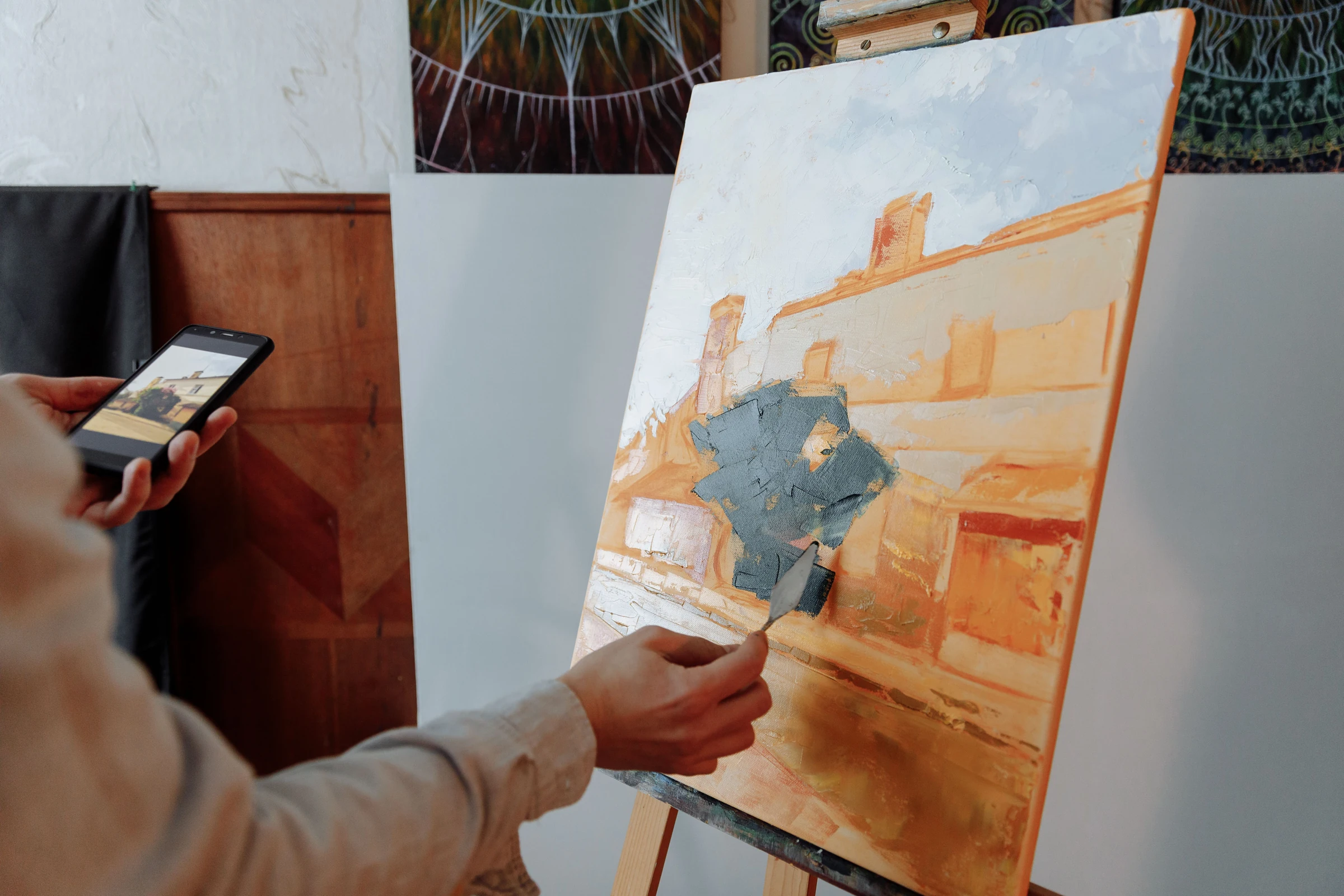
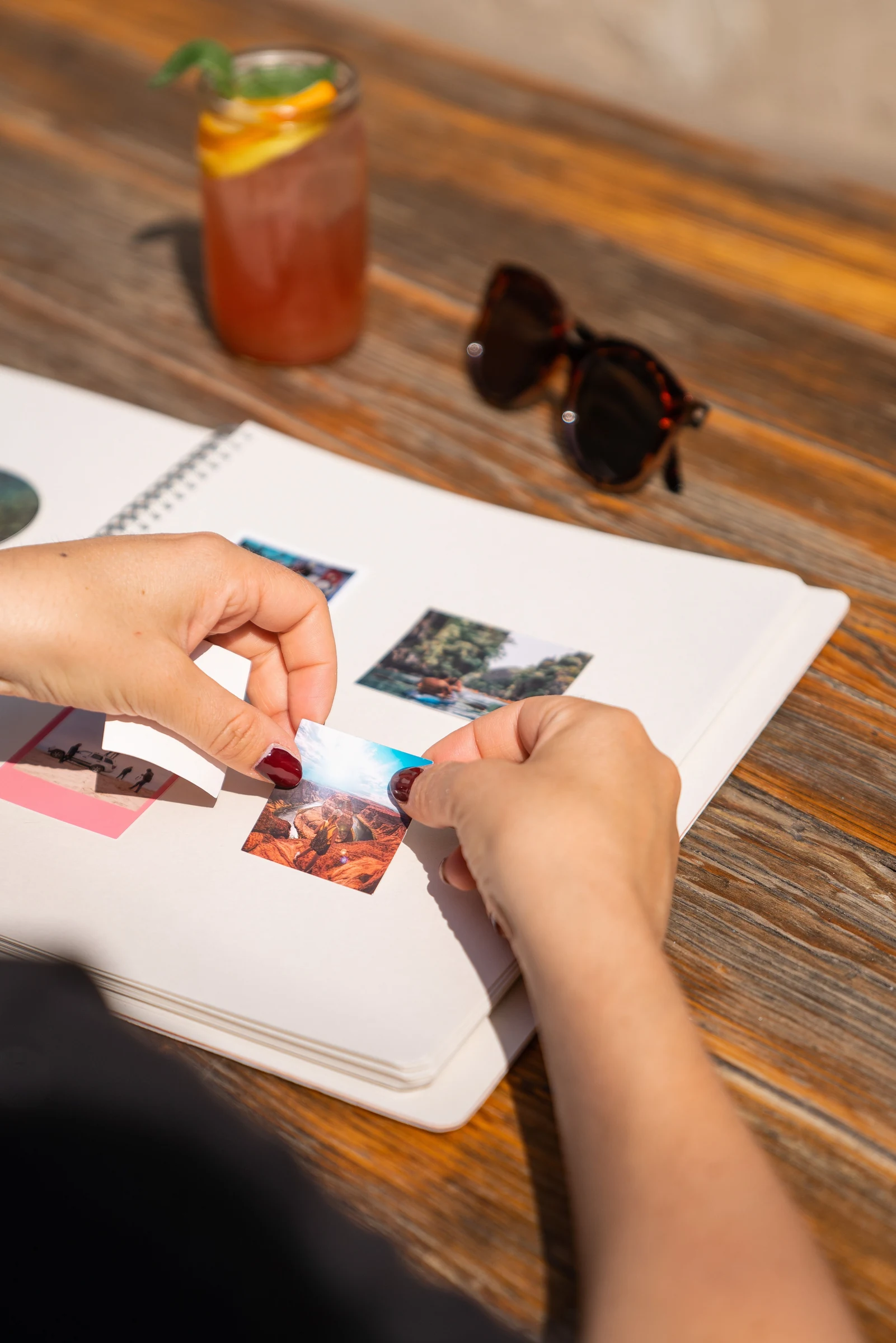
To turn a memory into a painting, first identify what you want to preserve: a place, a relationship, a detail or an experience’s atmosphere. Photographs can help, but do not need to solve the project by themselves. A clear account lets you discuss what should stay recognisable and what can be reinterpreted through composition, colour and texture.
Choose the memory’s core
A journey contains many images, but they do not all mean the same to you. Try completing the sentence “I would like to find again…”. It might be a coastline, afternoon light, a sense of space or a connection with someone. This first choice helps avoid accumulating competing details in the painting.
Write a few lines about why that reference matters. You do not need a literary account or an explanation of every event. Useful information changes the design: what must remain recognisable, the atmosphere you want and associations you would rather avoid. The rest can emerge in conversation.
Gather a few references with a clear purpose
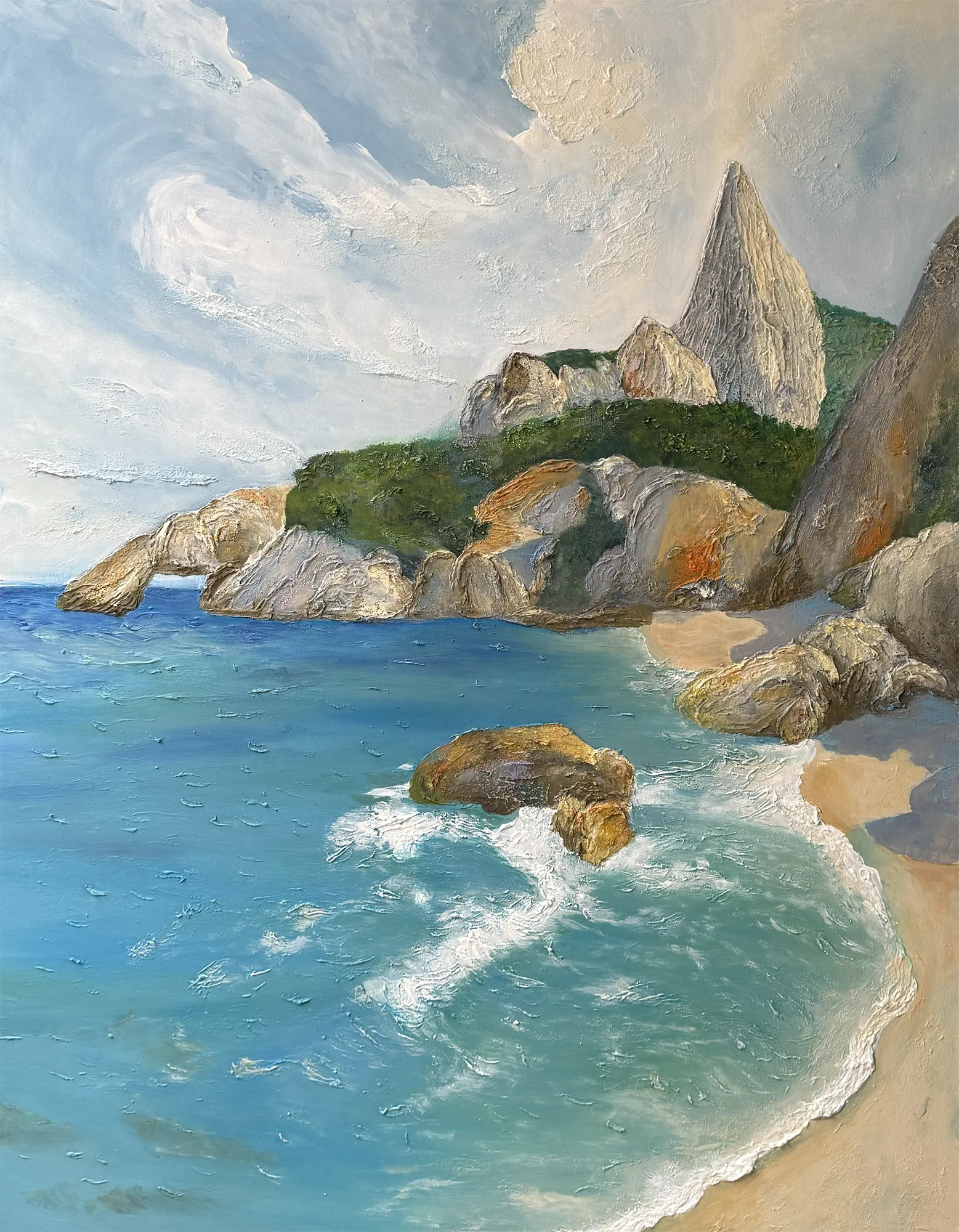
Select a few photographs and explain what each shows: the subject, a colour, a viewpoint or the light. An imperfect photograph can hold an important detail; a beautiful photograph may not represent what you want to remember. Separating these functions avoids confusing photographic quality with the painting’s direction.
You can add a simple sketch or description if an image is missing. You do not need to reconstruct every detail with photographic precision. Share references you can use, and tell the artist when details are uncertain: distinguishing memory from documentation clarifies the room for interpretation.
Decide what can change in the painting
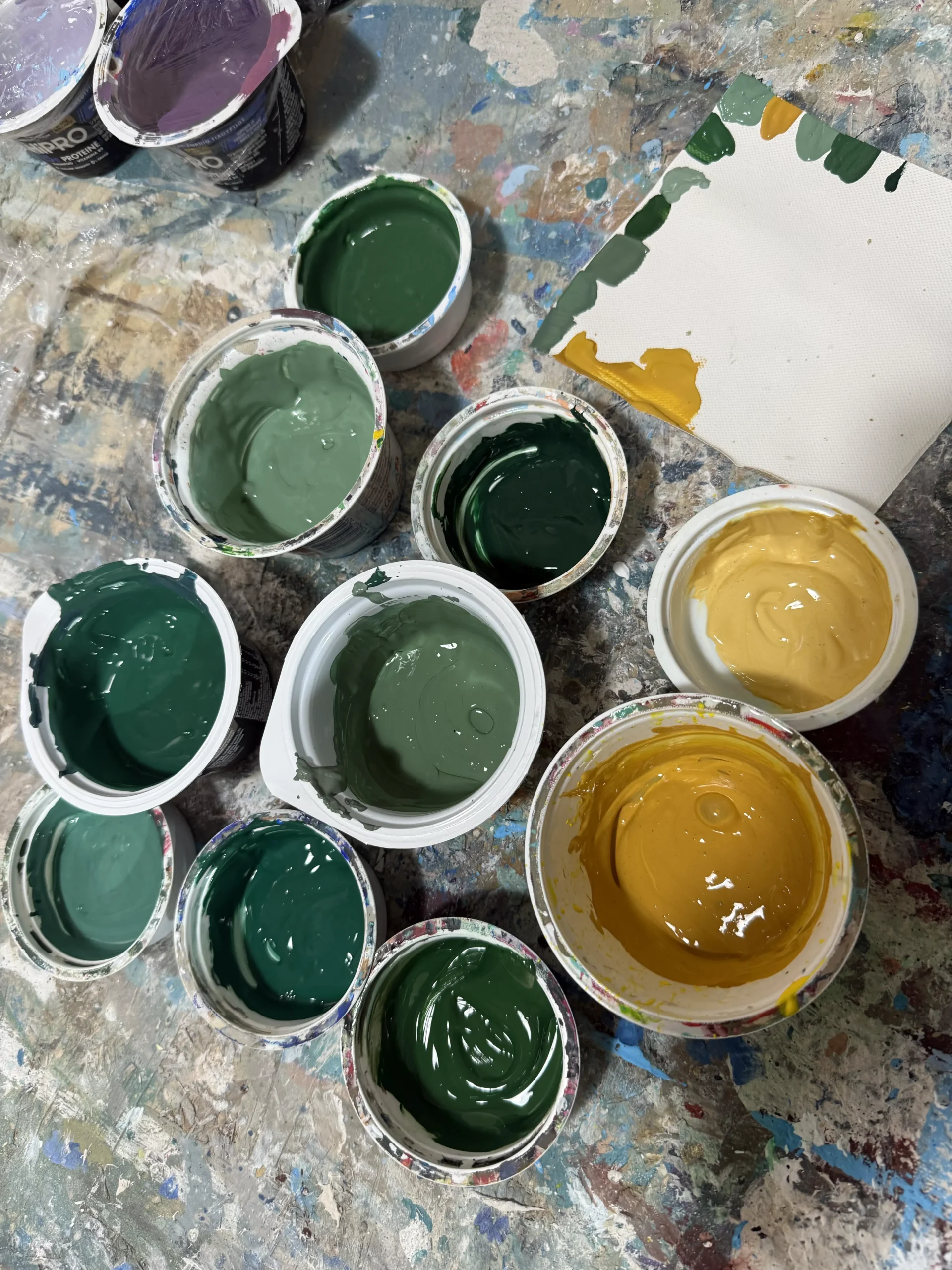
A photograph and a painting use different languages. You may want a readable subject with a freer composition, or prefer a more abstract interpretation of a place’s colours. Put your priorities in order: recognising a coastline may matter more than the exact position of a cloud.
Also clarify what you do not want changed. Not every reference suits every artist’s language: explore the portfolio before choosing whom to work with. The conversation checks compatibility and avoids asking for an outcome that contradicts what first appealed to you in their work.
Explore your connection with abstract painting →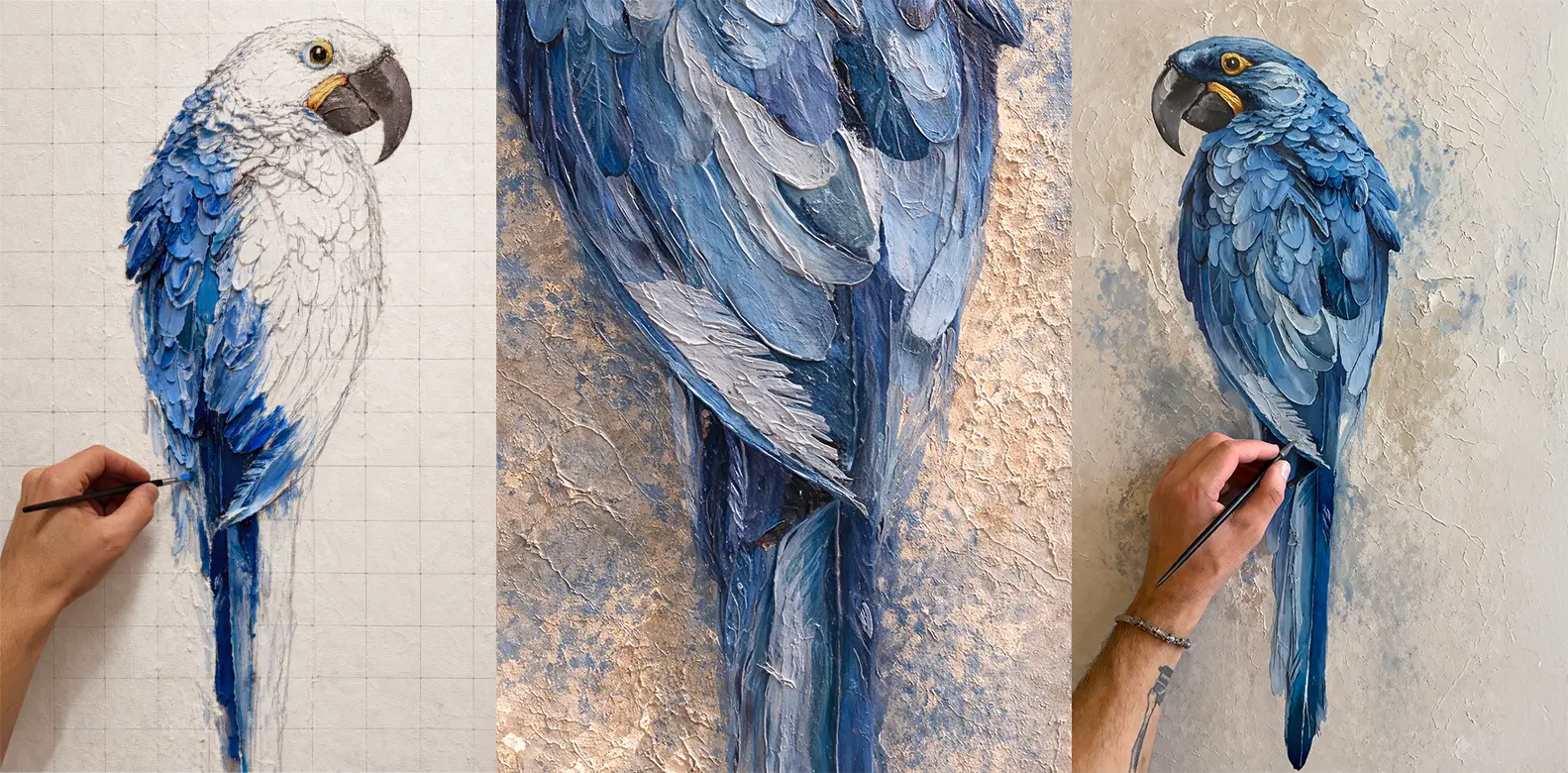
Two projects, two starting points
In Tre Viaggi, three shared experiences became a textured triptych. The story was translated into a composition considering the relationships between panels. It is a useful reference for those who want to recognise a story without reconstructing it as a sequence of photographs.
L’uomo che aveva 120 pappagalli began with a memory without photographs. Discussion with the client guided the drawing and composition. The two stories show different possibilities rather than models to repeat: a new commission needs an understanding of what matters in your account and how it can meet the artist’s practice.
Read the story of the blue parrots →Discover how Tre Viaggi began →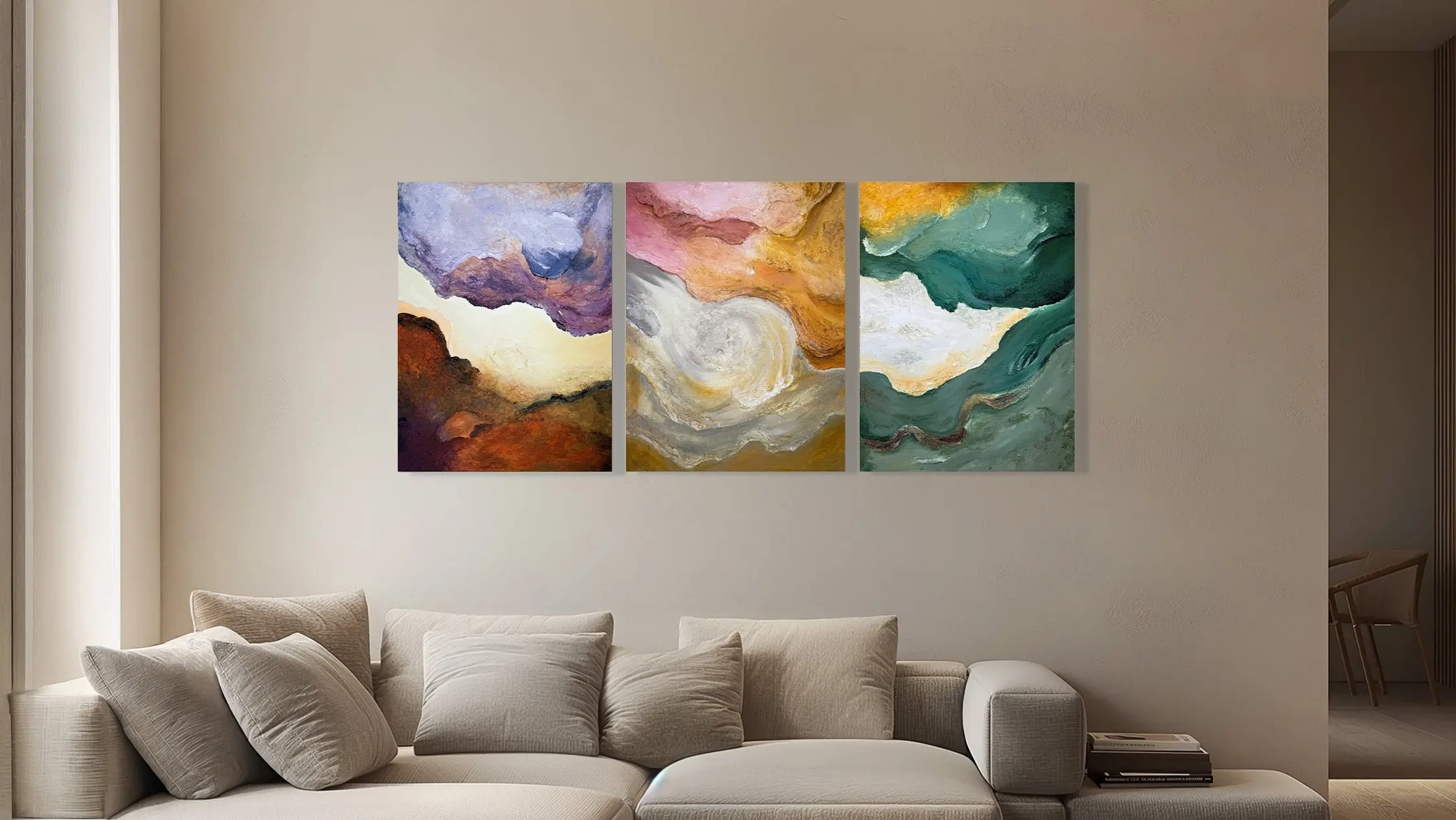
Connect the memory with your wall
A meaningful image also needs a suitable presence in the room. Collect a front-view photograph of the wall, a wider view and available measurements. Explain where you will see the painting from and whether you want a strong focus or a subtler presence. These choices influence format and composition.
If the starting point is still hard to define, A Window into You helps gather personal references through questions and discussion. You can arrive with an incomplete account: the first consultation helps establish how to develop it and which design approach is suitable.
Explore A Window into You →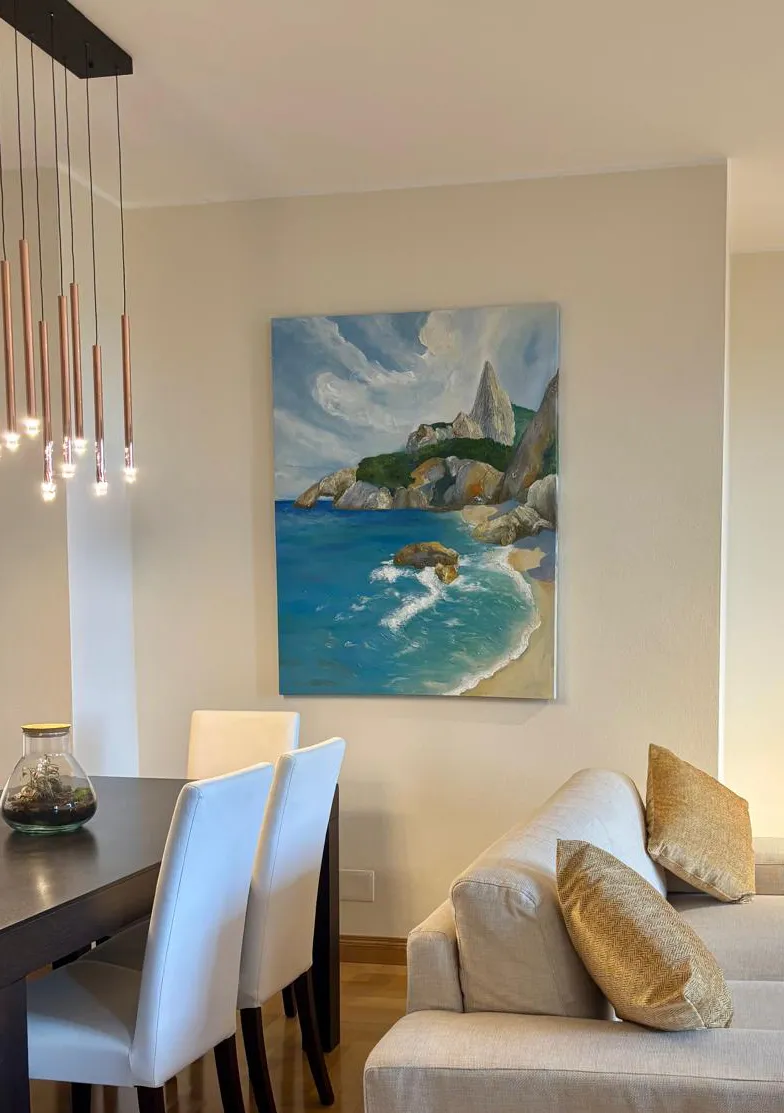
Bring a memory, a few images and a photograph of your space. We can start with these elements to understand which part of the story you want to find in the painting.
Tell us your starting point →