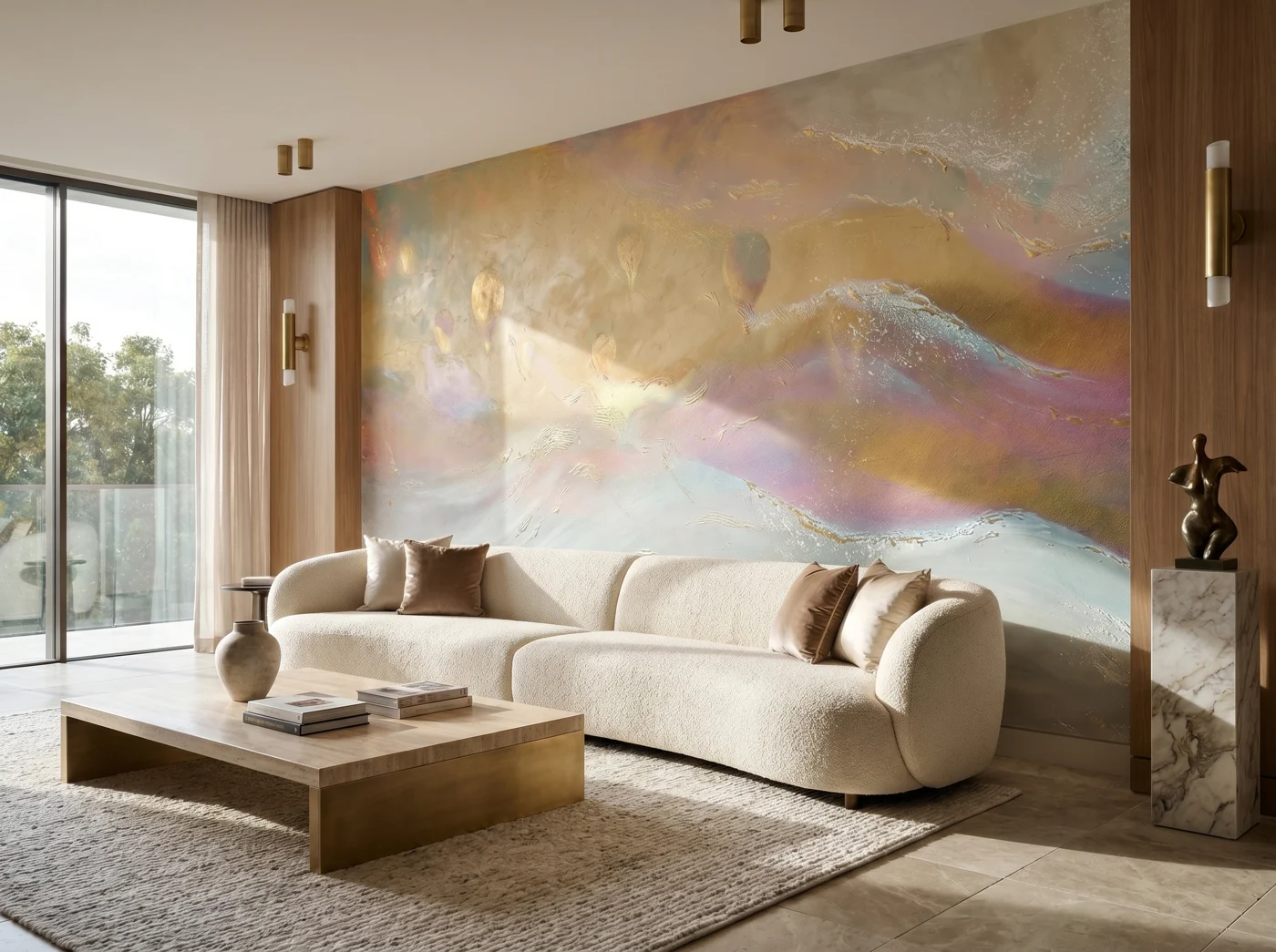
Does the empty wall above the sofa leave you unsure about the size of the painting? This guide takes you step by step: we will start with the sofa’s dimensions, measure the available space and try out proportions before choosing the artwork best suited to your room.
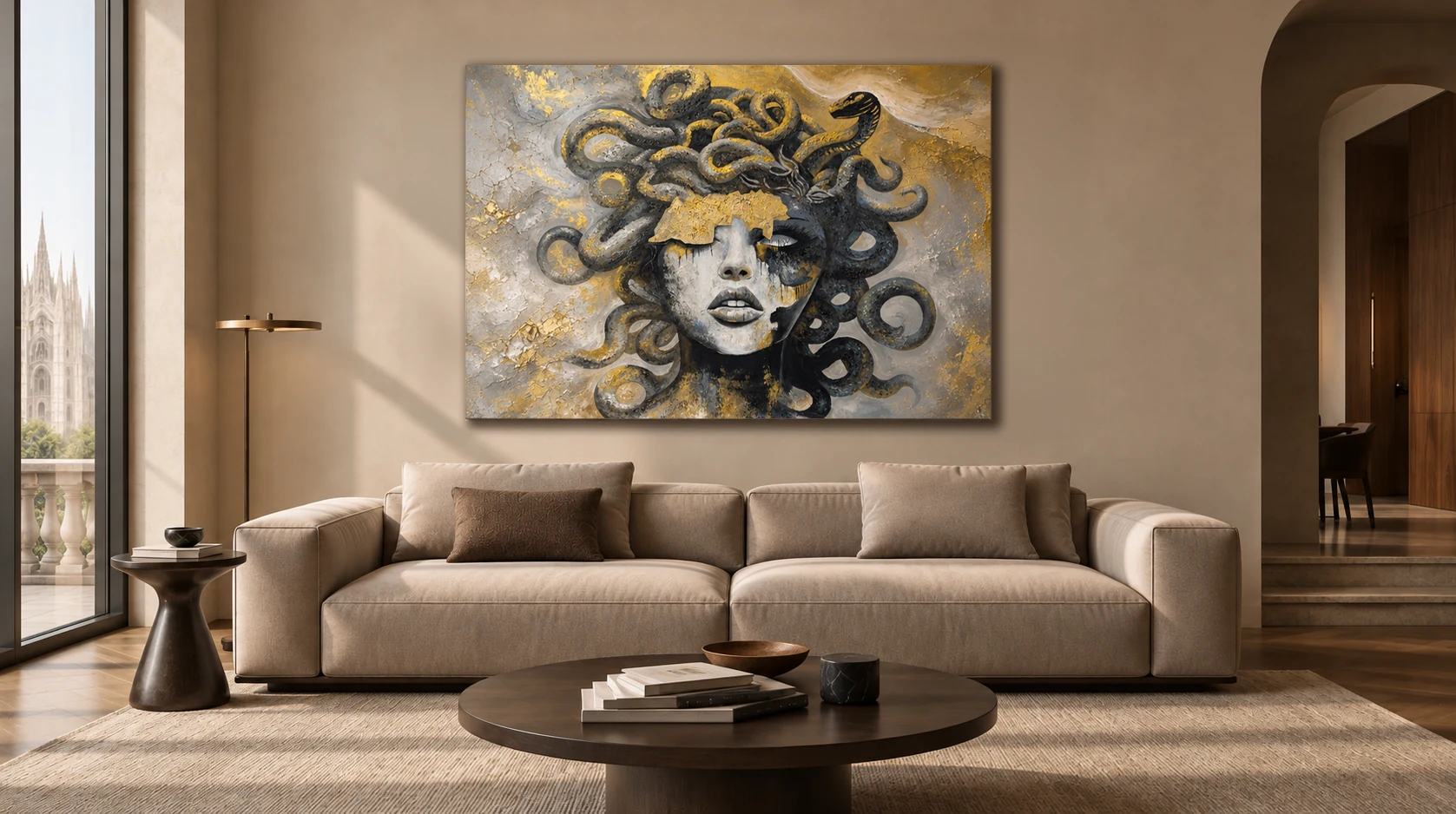
As a starting point, you can consider an artwork or composition around two-thirds the width of the sofa. For a 210 cm sofa, for example, that means starting at around 140 cm. This is a visual reference, to be adapted to the room, ceiling height and surrounding space.
The right size is checked by looking at the space as a whole.
Which measurements to take
Measure the width of the sofa and the usable wall. Also consider the space between the sofa back and the ceiling, and any fixed features: windows, wall lights, doors, radiators or other furnishings.
If you are considering multiple panels, measure the overall dimensions of the composition, including the gaps between them.
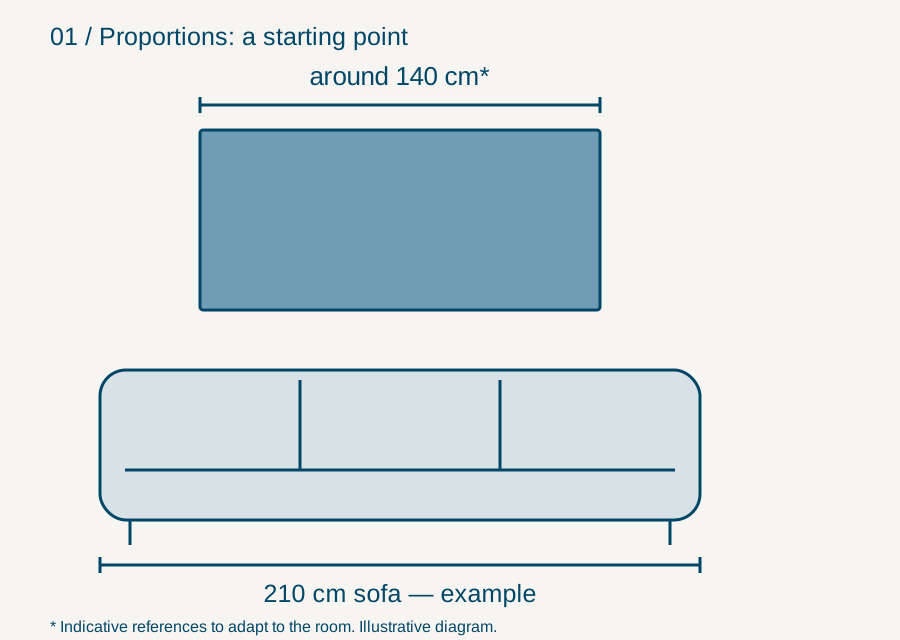
An example to guide you
Above a 210 cm sofa, you can begin by trying a composition around 140 cm wide, then consider a wider or more compact one. An airy room and an uncluttered wall can accommodate a different presence from a living room with many nearby elements.
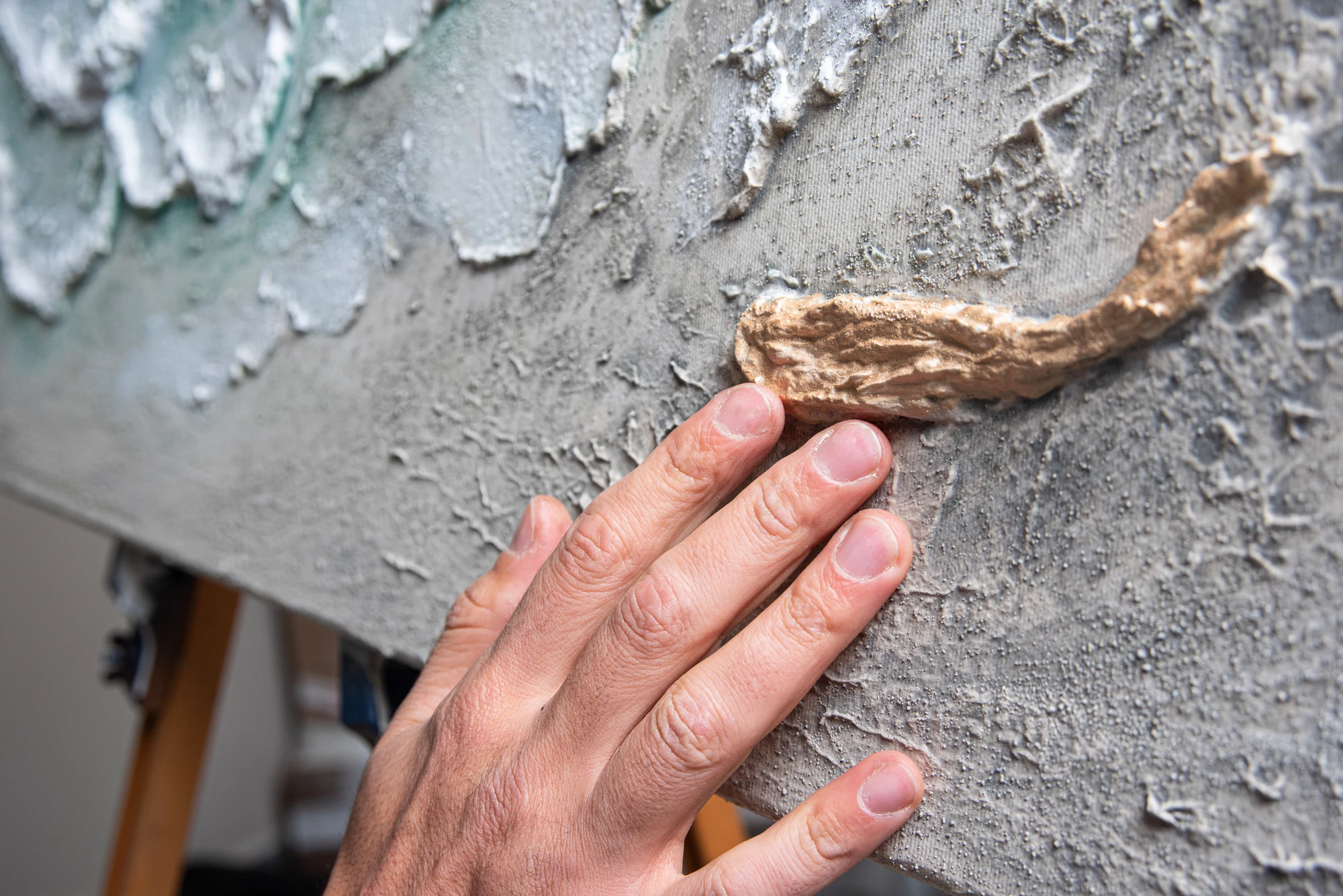
The painting’s design also affects its visual weight. A dark, heavily textured work may appear more prominent than a light composition of the same size.
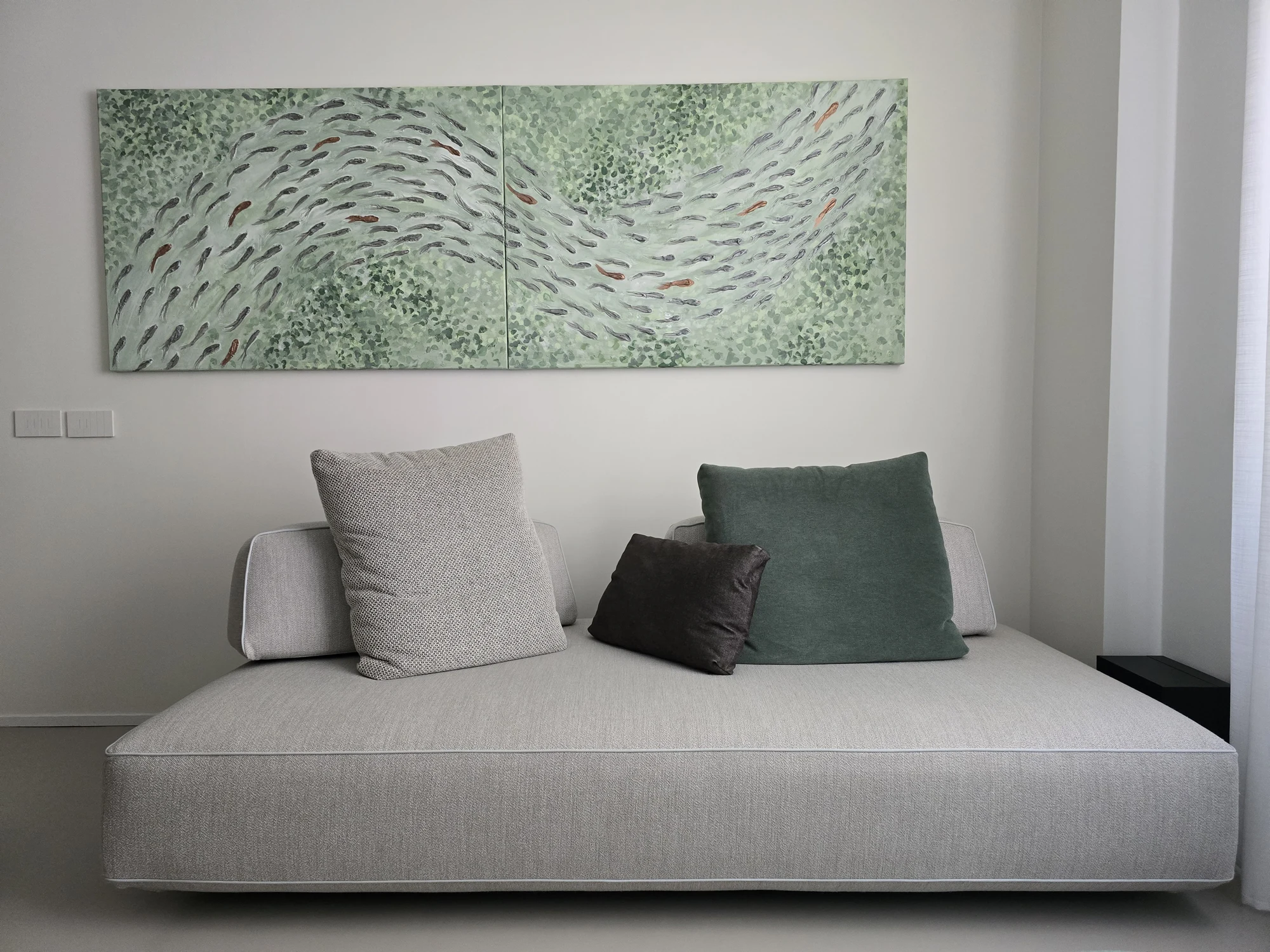
Try the proportions before deciding
Cut out a paper template in the size you are considering and place it on the wall using a method suitable for the finish, without damaging it. View the whole setting as you enter the room and from the places where you usually sit.
For a commissioned project, a preview in the space also lets you compare the subject and colour. It helps you consider the composition before the artwork is created.
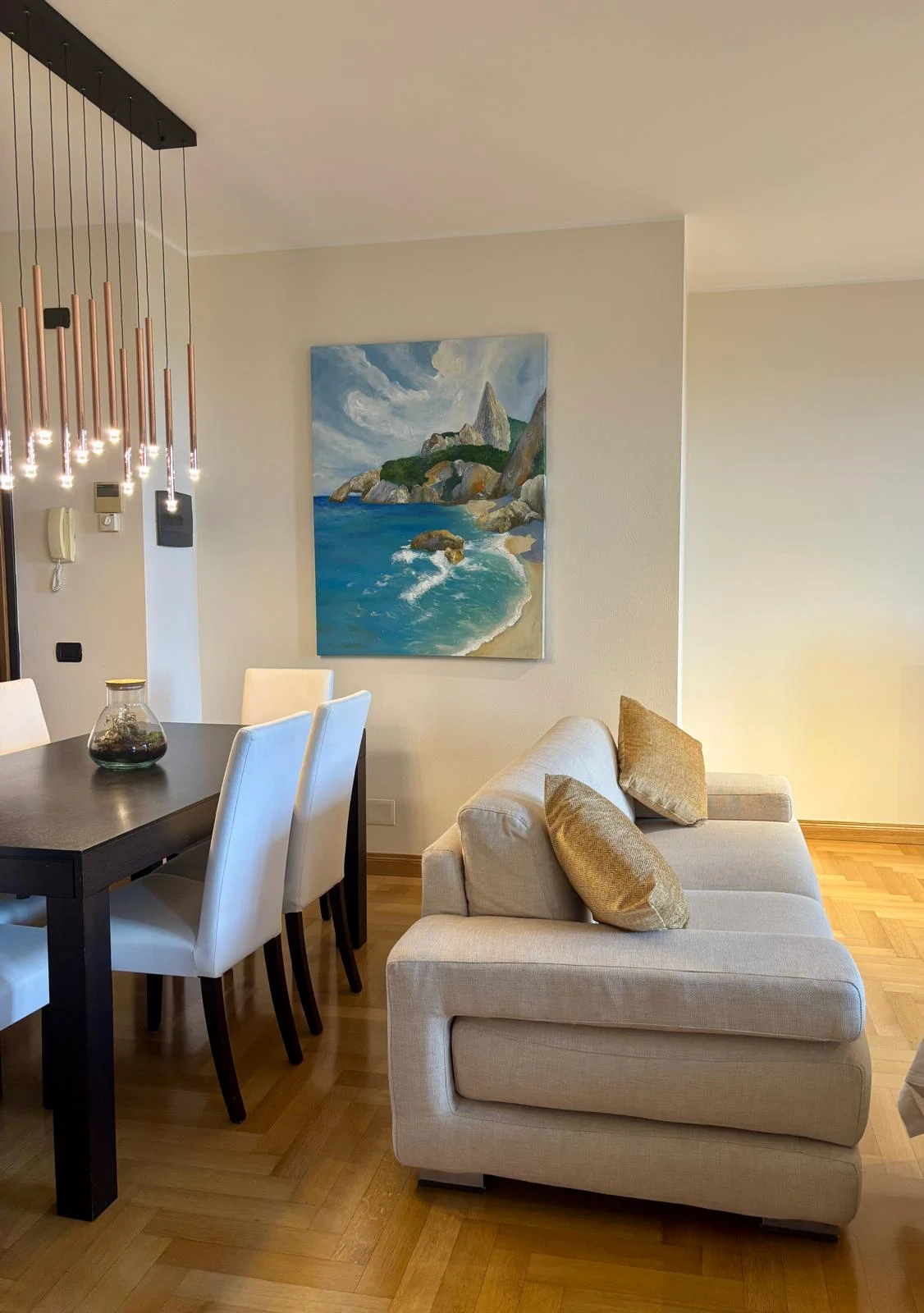
At what height to place it
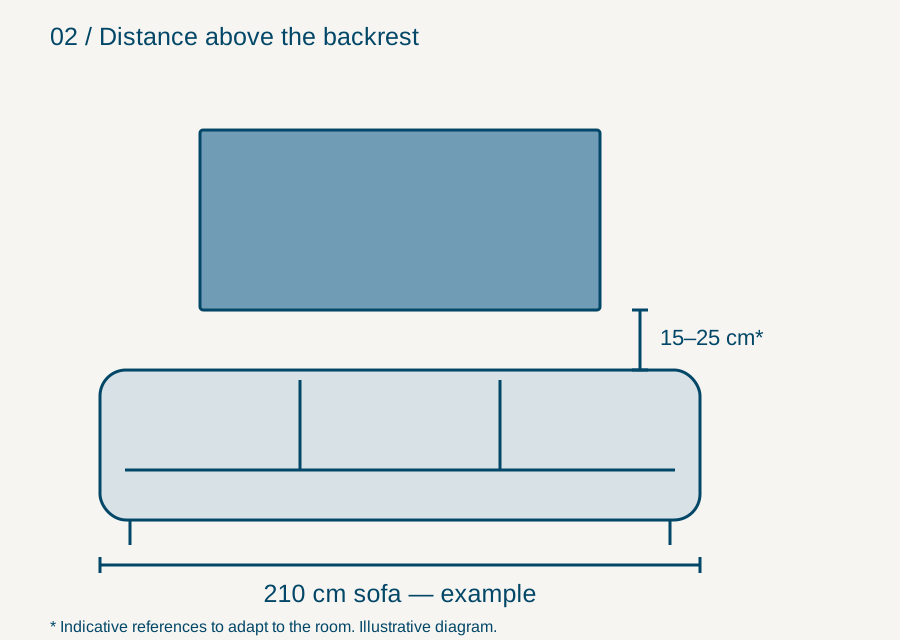
A gap of around 15–25 cm between the sofa back and the lower edge of the artwork can be a starting point. It should be adapted to the sofa’s height, the habits of those using it and the safety of the fixing.
If the painting is too high, it may look disconnected from the furniture. If it is too low, it may be inconvenient or exposed to knocks. Test the actual position with a template before preparing the installation.
A single canvas or multiple panels
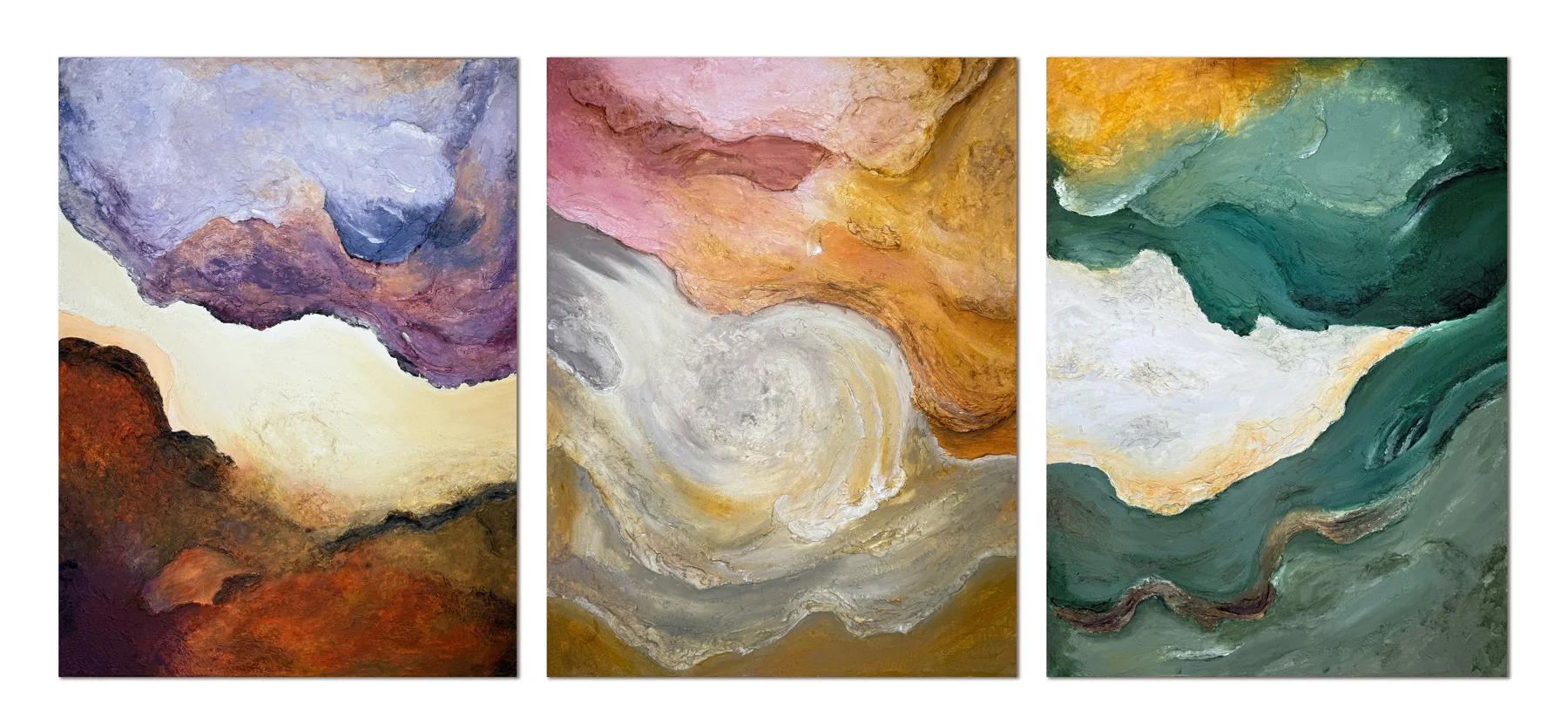
A single canvas focuses the eye. A diptych or triptych allows the artwork’s presence to be spread out and introduces a rhythm between the panels.
The choice concerns the design as well as the overall dimensions. In Tre Viaggi, three panels gave form to three shared experiences and required a study of the spacing on the wall.
View the Tre Viaggi project →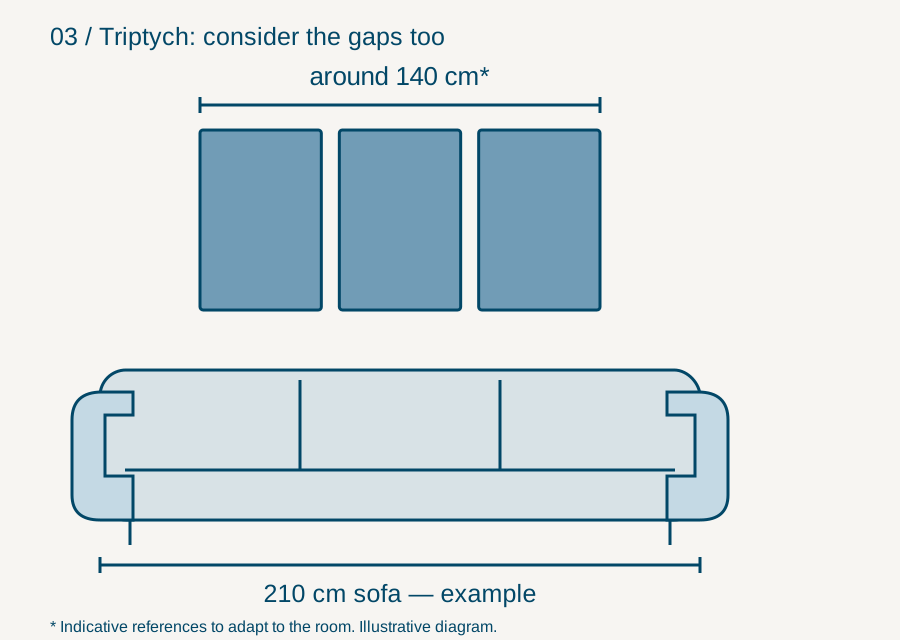
Three mistakes to avoid
- Choosing solely on the basis of the sofa’s width, without considering nearby elements.
- Turning a suggested proportion into a rule for every room.
- Deciding on the size before considering the subject, technique and visual presence of the artwork.
When a consultation is useful
If you have tried different solutions without feeling convinced, gather a front-on photograph of the wall and a wider photograph of the living room. During the consultation, we can look at the space, light and proportions together before defining the painting to be designed.
Let’s assess your wall together → Alessandro Vinci · Artist and designer