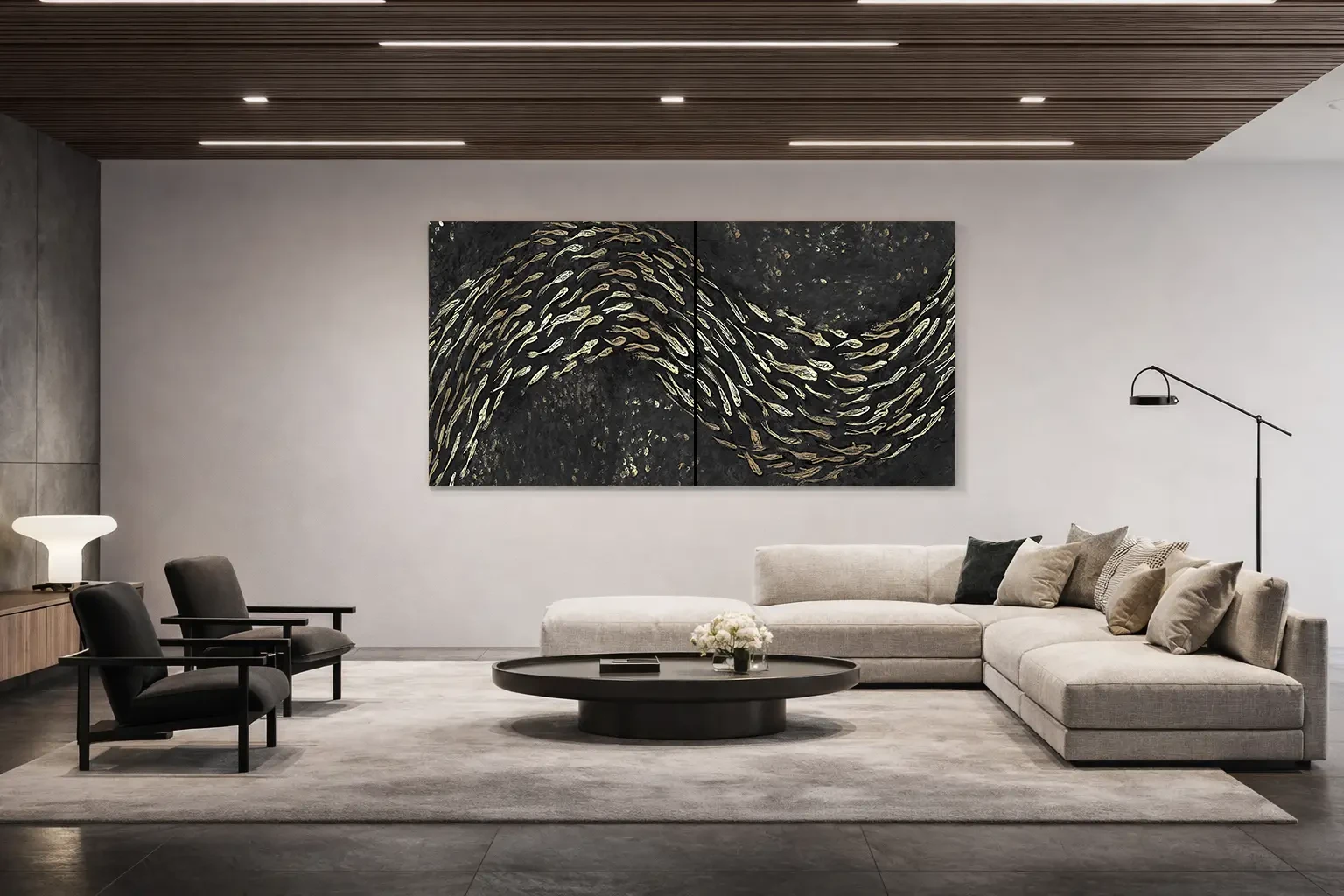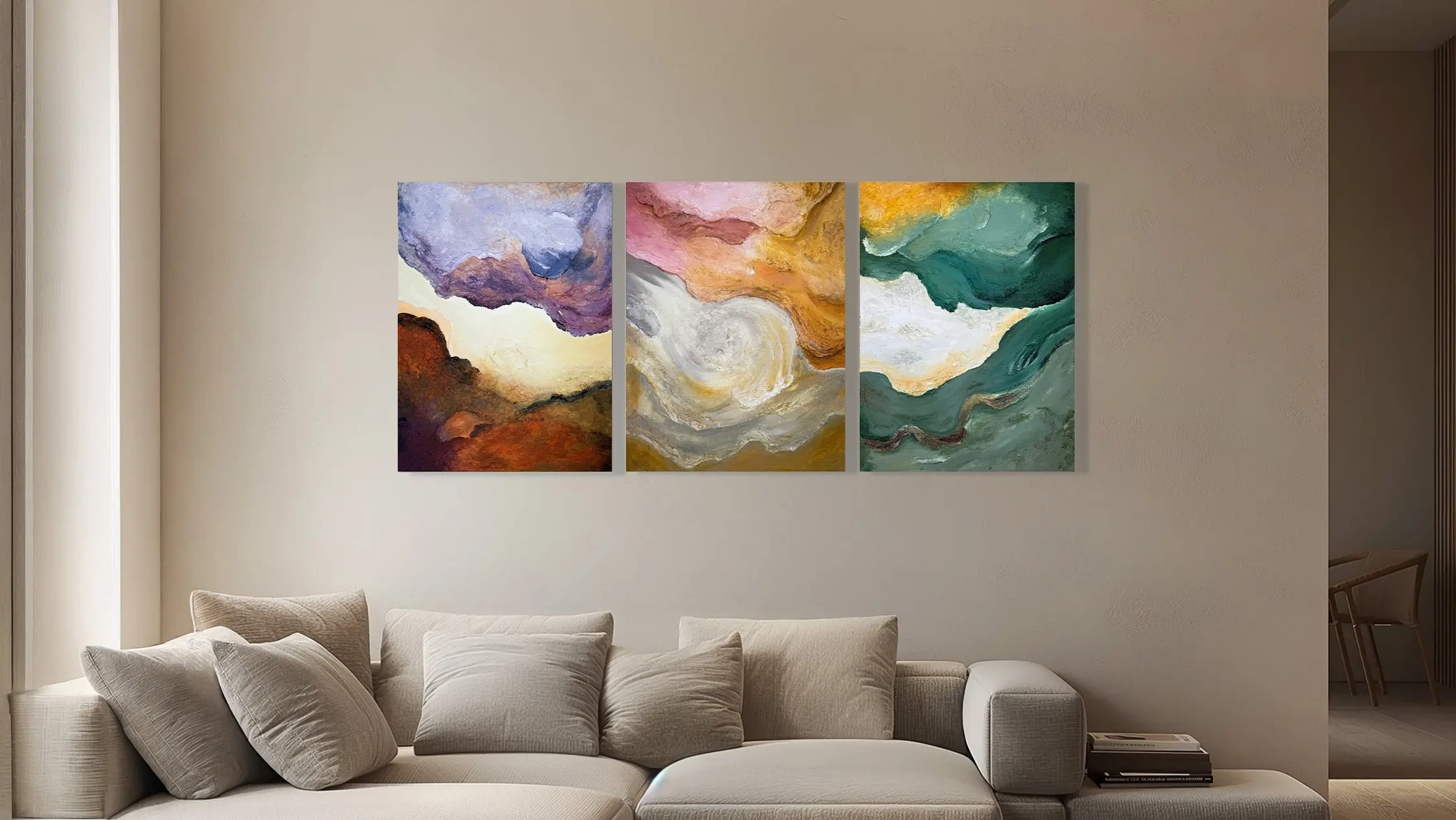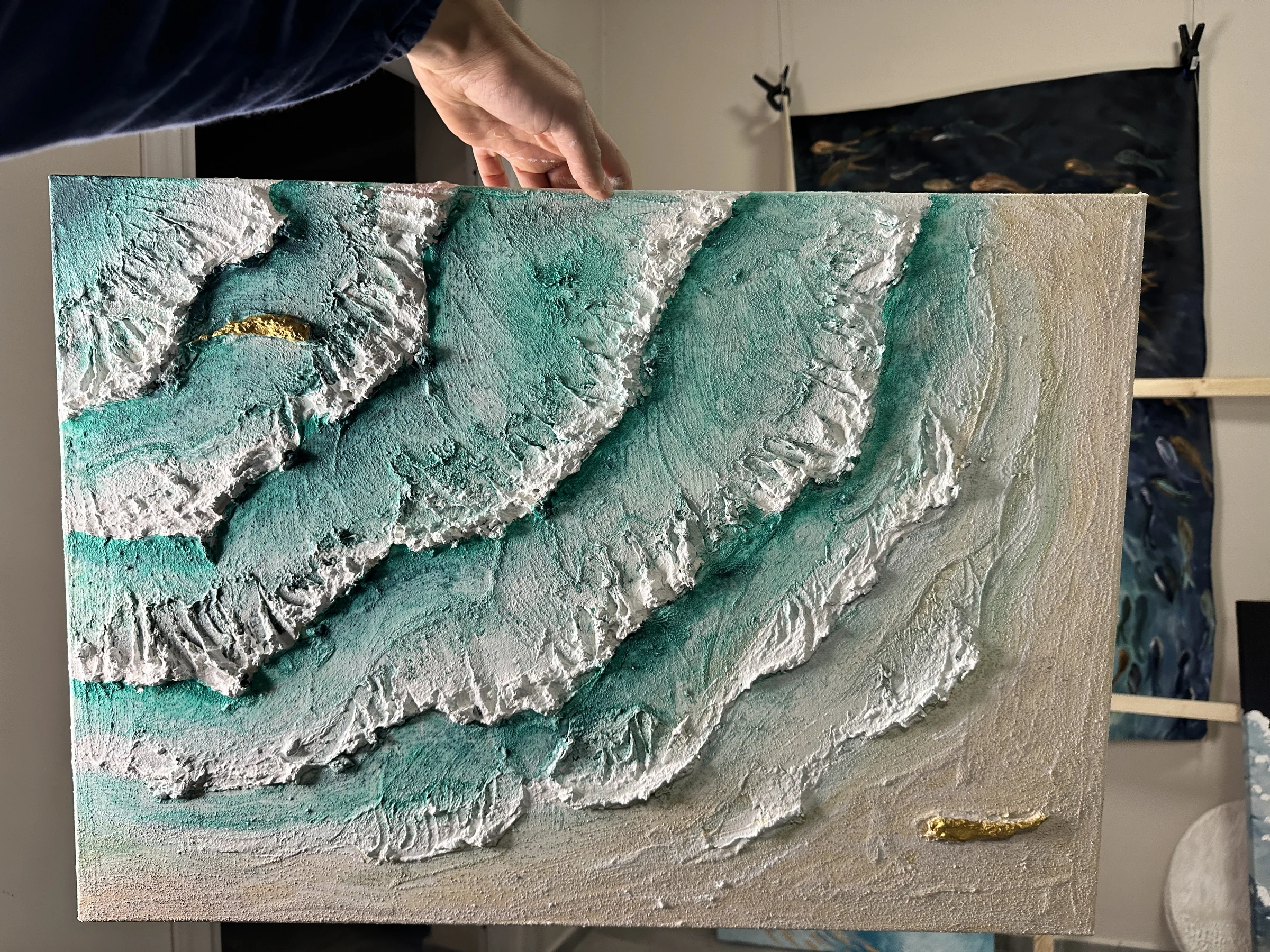
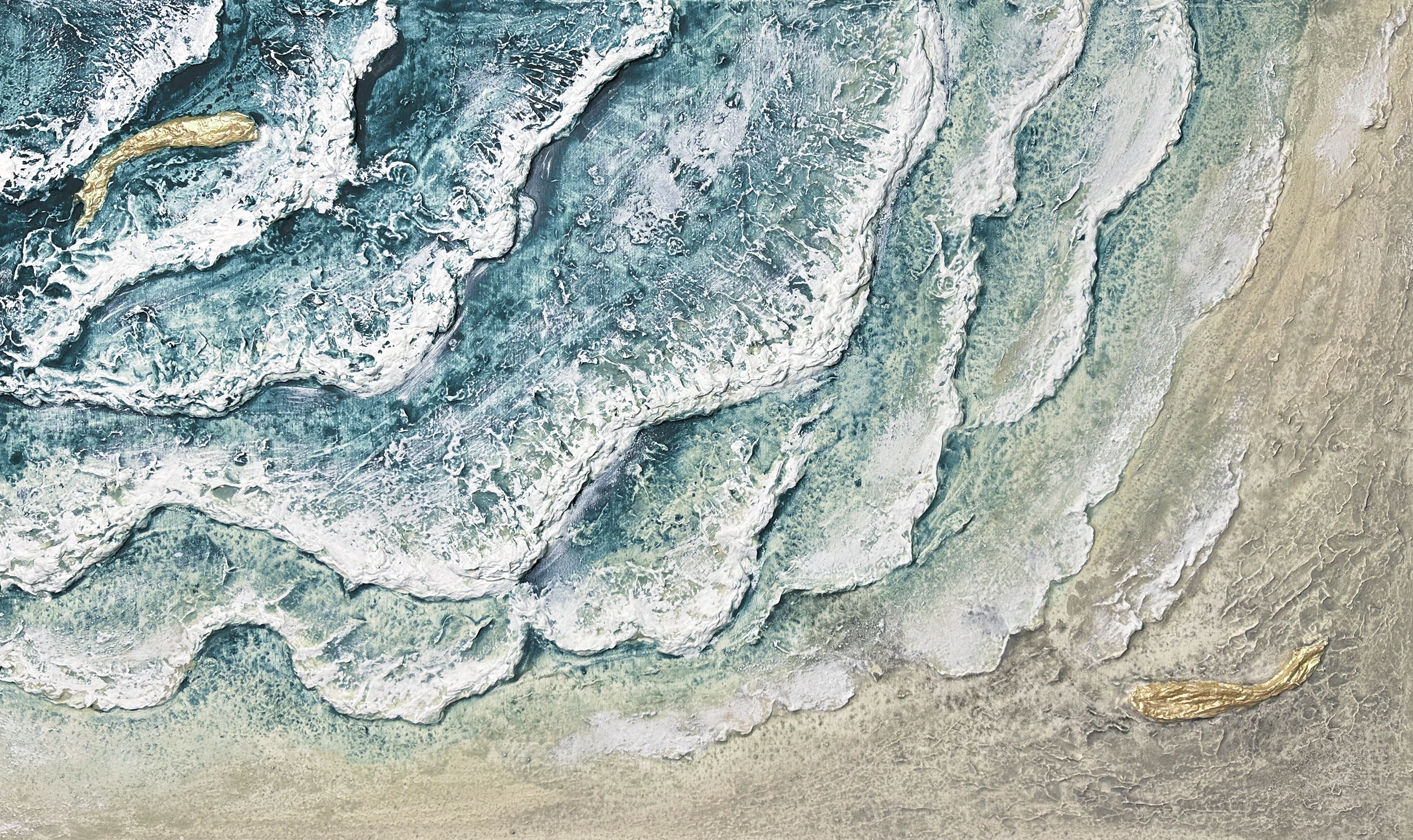
A textured painting is a work in which the surface plays a visible role: thickness, raised areas and marks contribute to the composition alongside colour. Texture may be subtle or pronounced. To choose this kind of painting, look at how it changes between an overall view and close observation, then consider the light in your space.
Texture is part of the painting’s language
The word textured describes a surface quality, not one fixed recipe. Different artists can create raised areas through different processes, and choices within the same studio also depend on the artwork. A photograph therefore cannot reliably tell you its materials, weight or care requirements.
Ask how your painting will be made and what its surface will be like. In Alessandro Vinci’s work, pronounced relief is visible in the waves of Frangente and the surfaces of Confini naturali. Compare close-up photographs with the whole artwork to understand texture’s role in the composition.
Explore artworks and details in the portfolio →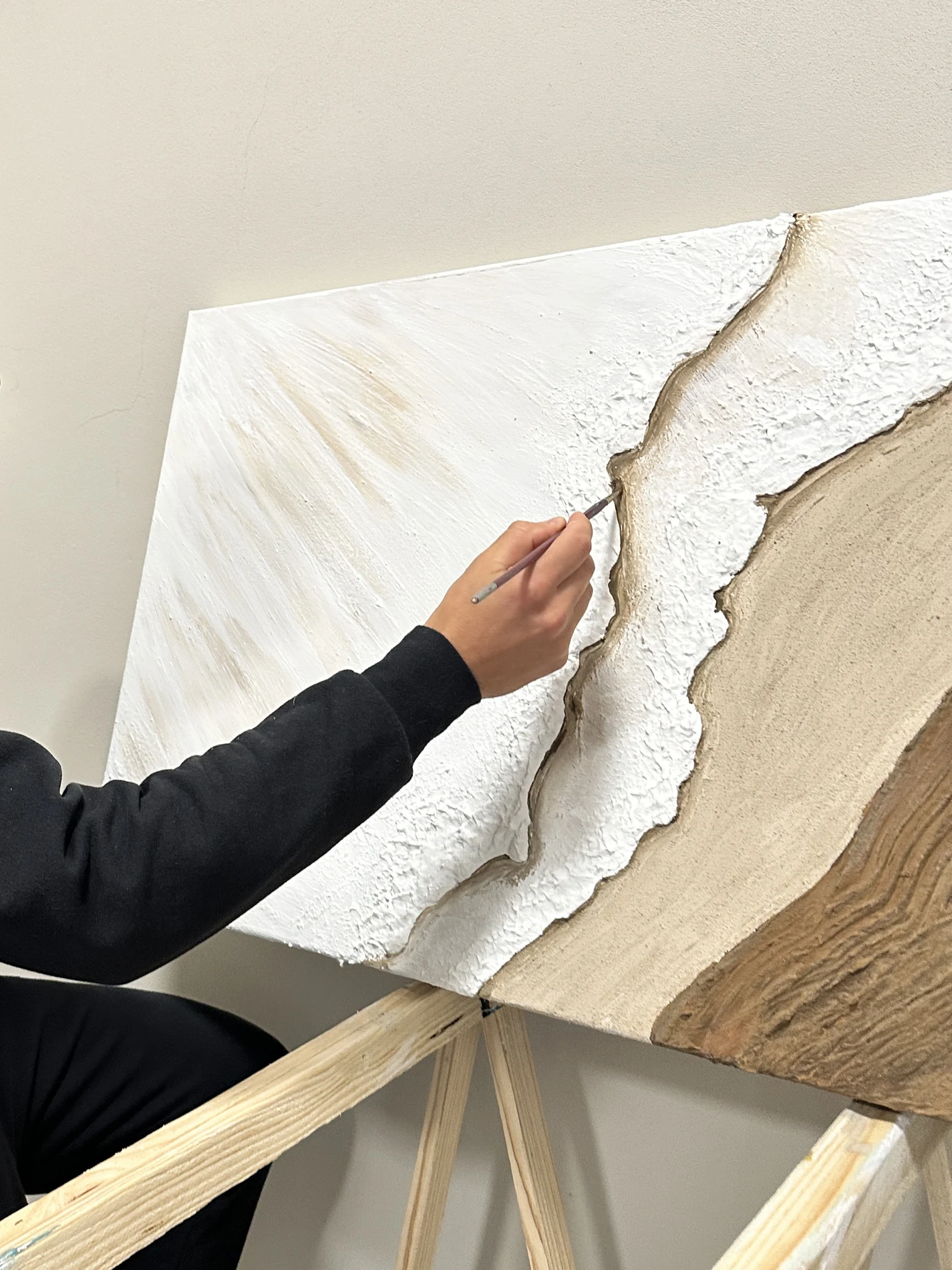
Look at the work from two distances
From a distance, assess the subject, movement and relationship between light and dark areas. Up close, notice where the surface rises, which marks repeat and which areas remain smoother. A painting that works for you should hold your interest under everyday viewing conditions without always requiring a close-up.
If the wall is mainly seen from the end of a corridor, the overall composition will matter strongly. Beside a seat, you may often discover the details. No amount of relief is inherently better: what matters is the relationship between the artwork’s character and how you live with it.
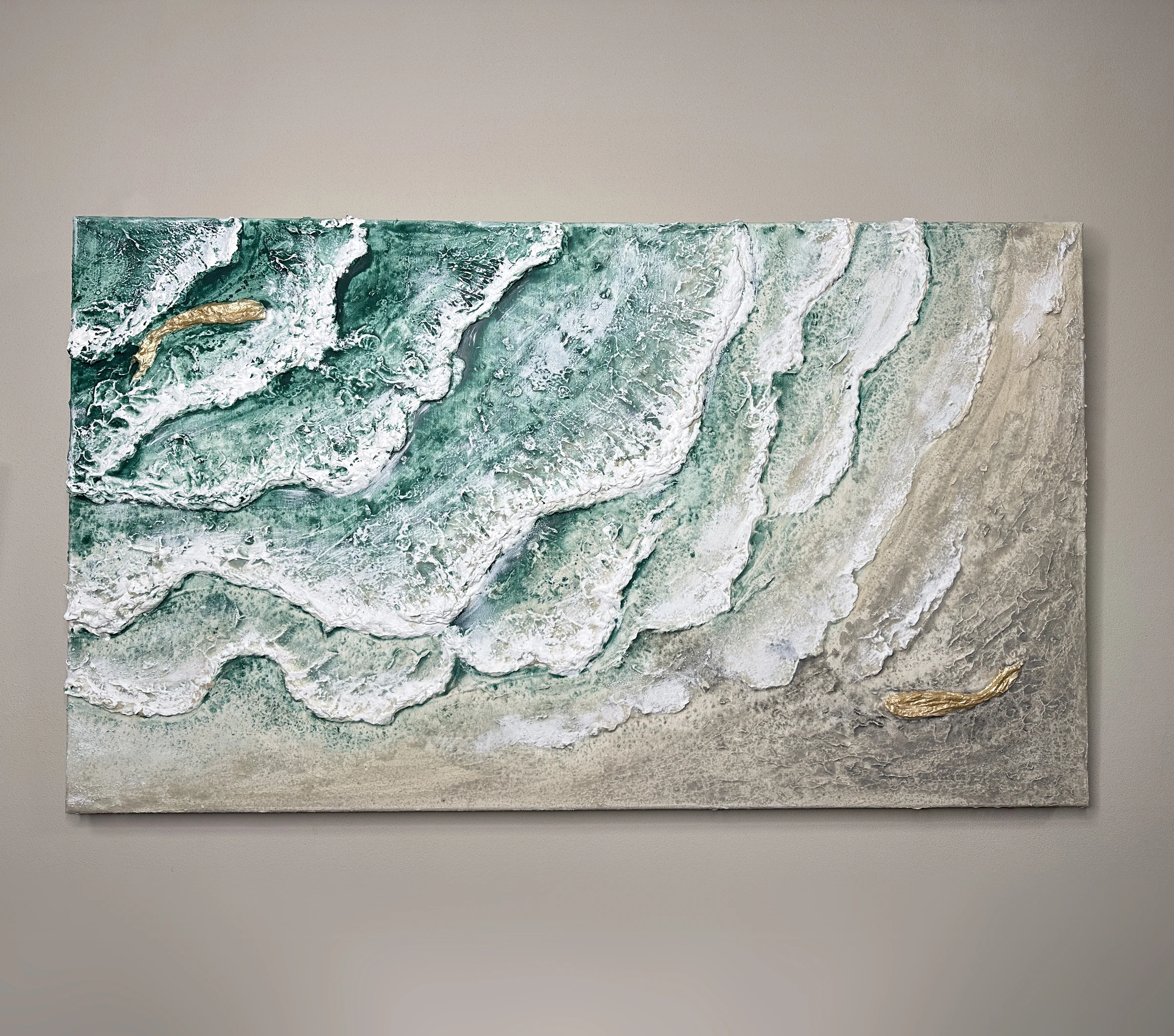
Light changes how relief is seen
Side lighting can make small surface shadows more visible; diffuse frontal light may emphasise colour. Assess these effects on the particular artwork. Reflective finishes also call for attention to viewpoint, as a reflection may temporarily obscure some details.
To compare two works, ask for photographs taken in similar conditions and, where possible, a short video. One photograph with strong raking light can emphasise texture more than it will appear in the room. Use an interior preview to assess composition, remembering that a screen cannot reproduce the painting’s full physical presence.
Explore lighting for your painting →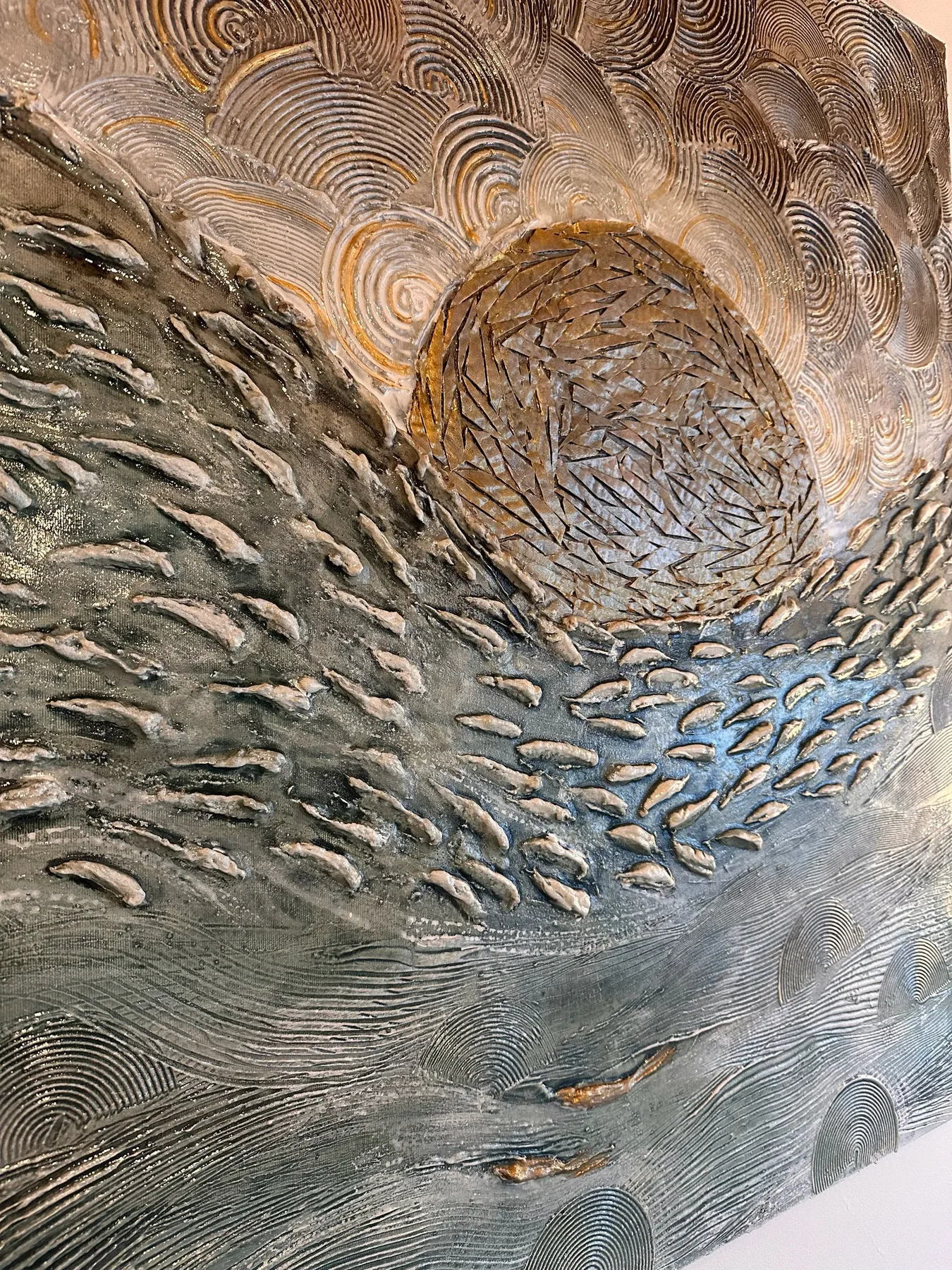
Choose a suitable position
Treat the surface as part of the artwork’s visual presence. On a wall with patterned finishes, shelves and nearby objects, strong texture can add another layer of complexity. A clearer wall may give you more opportunity to read the marks and changes in light.
Avoid passageways where people may frequently brush against the painting, and arrange fixings suited to its actual weight. Follow the artist’s specific display and care instructions: a raised surface should not be treated like a washable panel. Prevention is simpler than intervention on the paint.
Read the guide to caring for canvas paintings →
What to establish before a commission
Bring examples of surfaces you like and explain what attracts you: fine marks, pronounced relief, metallic passages or contrasts between smooth and raised areas. Mention what you would rather avoid too. These observations help make a request more precise than simply asking for a textured painting.
Agree on format, artistic direction, budget and project characteristics before the painting is made. Ask which aspects can be assessed in studies and which belong to the final work by hand. The conversation establishes a shared direction while allowing for the variations inherent in a hand-painted artwork.
Discover how a commission develops →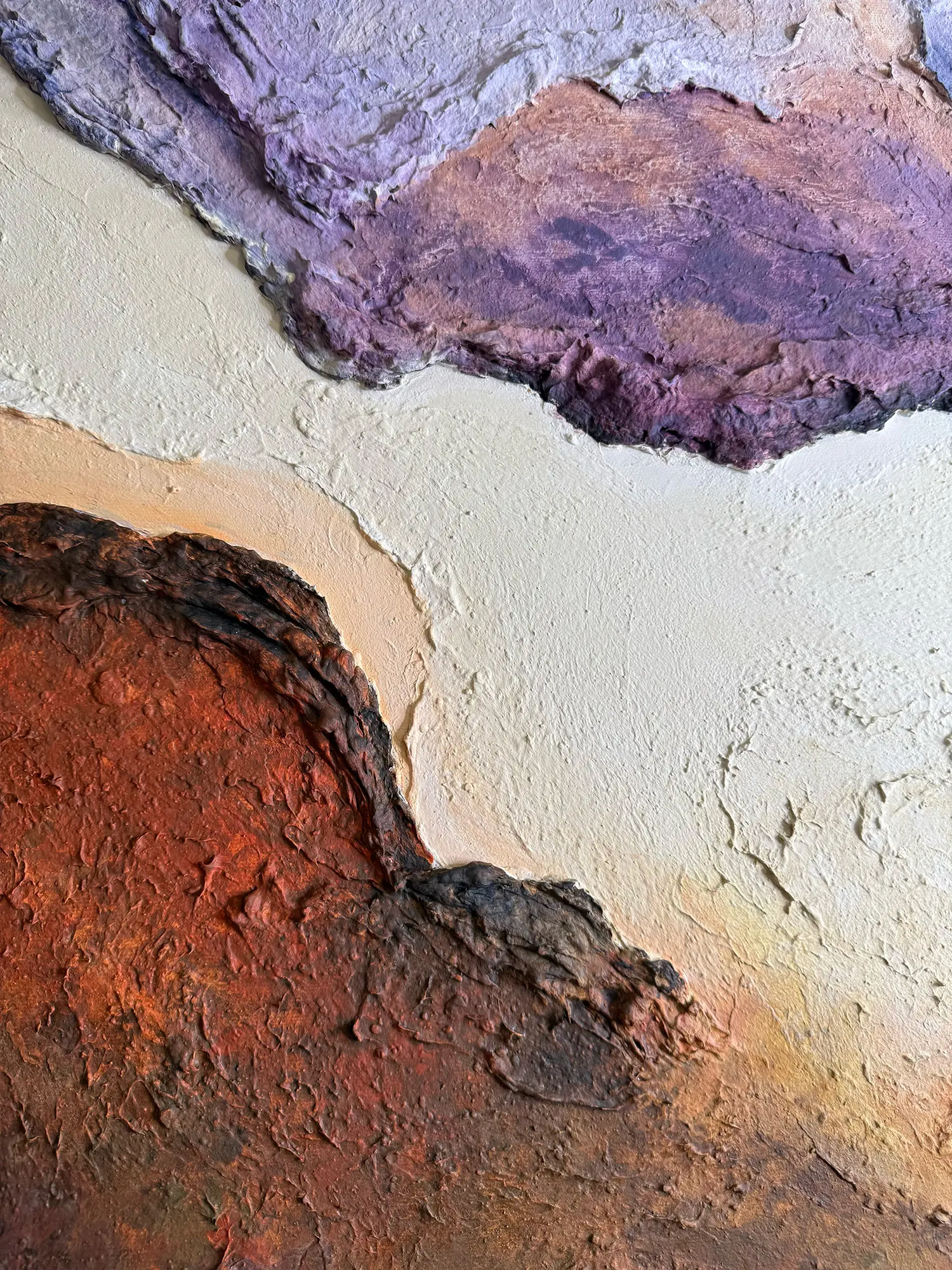
If textured surfaces appeal to you, choose a work from the portfolio and show us the detail that interests you. We can start there to explore a direction suited to your wall.
Let’s discuss texture and your project →